बौद्ध धर्म के प्रवर्तक महात्मा बुद्ध एक क्षत्रिय थे। उनका जन्म लगभग 563 ईसा पूर्व में शाक्यों के कुल में कपिलवस्तु के निकट लुम्बिनी ग्राम के आम्र कुंज में हुआ था । इनके पिता शुद्धोधन कपिलवस्तु के शाक्य गण के मुखिया तथा माता महामाया कौशल राजवंश की कन्या थीं । इनके जन्म के सातवें दिन माता की मृत्यु होने के कारण इनका पालन-पोषण इनकी मौसी प्रजापति गौतमी ने किया। इनके बचपन का नाम सिद्धार्थ था। प्रारंभ से ही इनका ध्यान आध्यात्म की ओर अग्रसर था तथा प्रायः यह चिंतन में लीन रहते थे। 16 वर्ष की अवस्था में इनका विवाह यशोधरा ( अन्य नाम- गोपा, बिंबा तथा भद्र कच्छना) से हुआ। यशोधरा से सिद्धार्थ को एक पुत्र भी उत्पन्न हुआ जिसका नाम राहुल पड़ा परंतु सिद्धार्थ का मन सांसारिक भोगों और मोह बंधन में नहीं लगा। वे सांसारिक दुखों को देख कर दुखी हो जाते और उनके निवारण के लिए उपाय खोजते। 29 वर्ष की अवस्था में सिद्धार्थ ने गृह त्याग दिया। जिसे ‘महाभिनिष्क्रमण’ कहा जाता है। 7 वर्षों तक भटकने के दौरान उन्होंने आलार कलाम तथा रुद्रंक रामपुत्र से दीक्षा ली परंतु ज्ञान नहीं प्राप्त हुआ। उन्होंने कठोर संयम अपनाया और ज्ञान प्राप्त करने के लिए अपने शरीर को विभिन्न यातनाएं दी। अंततः 35 वर्ष की अवस्था में उरुवेला( बोधगया) में पीपल वृक्ष के नीचे उन्हें ज्ञान प्राप्त हुआ। तभी से वे बुद्ध कहे जाने लगे। ज्ञान प्राप्त होने के पश्चात वे वाराणसी गए तथा अपना पहला उपदेश ऋषि वन (सारनाथ) में दिया। जिसे ‘धर्मचक्रप्रवर्तन’ कहा जाता है। उन्होंने बौद्ध धर्म के प्रचार प्रसार में लंबी लंबी यात्राएं की 80 वर्ष की अवस्था में 483 ईसा पूर्व में मल्ल गणराज्य की राजधानी कुशीनगर (वर्तमान पूर्वी उत्तर प्रदेश के कुशीनगर जिले में कसिया) में इन्होंने शरीर त्याग किया जिसे बौद्ध ग्रंथों में महापरिनिर्वाण कहा गया है। • बुद्ध के जीवन से संबंधित बौद्ध धर्म के प्रतीक-(जन्म- कमल एवं सांड) ,(गृहत्याग- घोड़ा),( ज्ञान -पीपल, बोधि वृक्ष),( निर्वाण- पद चिन्ह),( मृत्यु -स्तूप)।
बौद्ध धर्म की शिक्षाएं( Teachings of Buddhism)– महात्मा बुद्ध ने कहा कि संसार दुखमय है। (सर्वम दुखं दुखम्) और दुख का कारण तृष्णा है। बुद्ध ने कर्म के सिद्धांत पर बल दिया उन्होंने आत्मा के अस्तित्व को अस्वीकार किया तथा वर्ण व्यवस्था की घोर निंदा की। बुद्ध ने ‘प्रतीत्यसमुत्पाद’ (अर्थ- संसार की सभी वस्तुएं किसी न किसी कारण से उत्पन्न हुई हैं और इस प्रकार वे इस पर निर्भर हैं) को संपूर्ण जगत पर लागू किया।’प्रतीत्यसमुत्पाद’ द्वितीय और तृतीय आर्य सत्य के अंतर्गत आता है। उन्होंने निर्वाण प्राप्ति के लिए ‘अष्टांगिक मार्ग’ सिद्धांत का प्रतिपादन किया, जो निम्न हैं- (1) सम्यक् दृष्टि, (2) सम्यक् संकल्प,(3) सम्यक् वाक्/ वाचन,(4) सम्यक् कर्म,(5) सम्यक् जीविका,(6) सम्यक् व्यायाम/ प्रयास, (7)सम्यक् स्मृति, (8)सम्यक् समाधि । वैदिक धर्म के कर्मकाण्डों व अनुष्ठानों के विपरीत उन्होंने नैतिकता पर बल दिया। उनका कहना था कि इन आठ मार्गों को अपना कर व्यक्ति बिना किसी पुरोहित की सहायता और यज्ञ संपादित किये निर्वाण प्राप्त कर सकता है । उन्होंने पशु बलि की घोर निंदा की और अपने अनुयायियों को आचार नियम बताये- (1) पराये धन का लोभ नहीं करना । (2) हिंसा नहीं करना (3) नशे का सेवन नहीं करना (4) असत्य नहीं बोलना (5) दुराचार से दूर रहना । महात्मा बुद्ध ने ‘मध्यम मार्ग’ का प्रतिपादन किया अर्थात् न अत्यधिक कठोर संयम और न ही अत्यधिक विलासिता पूर्ण जीवन। उनके बताए सामाजिक आचार नियम लगभग सभी धर्मों द्वारा बताए गए हैं।बौद्ध धर्म को मानने वालों में निम्न वर्णों के व्यक्ति अधिक थे क्योंकि इसने वर्ण व्यवस्था की निंदा की गयी है । जातिरेका मनुष्याणां भिन्नास्ते कर्मभि: स्वकै: । इत्येतद् देशितं बुद्धैर्नृजात्येकत्ववादिभि: ।। नृणामाहारभेदेऽपि नृजातिर्न हि भिद्यते । अखण्डैका नृजातिर्हि विविधाहारसेविनी । ।(अशोकाभ्युदयकाव्यम्-सुत्तपिटक) ।। बौद्ध धर्म में ईश्वर और आत्मा के अस्तित्व को नकारा गया । बौद्ध संघ का दरवाजा हर वर्ण, स्त्री-पुरुष सभी के लिए खुला था जिससे समानता की भावना का विकास हुआ। ब्राह्मण धर्म की अपेक्षा बौद्ध धर्म अत्यधिक उदार और उसमें जनतंत्र के विचार प्रभावी थे, इसीलिए बौद्ध धर्म तत्कालीन उदित धर्मों में सबसे लोकप्रिय हुआ तथा भारत के बाहर भी इसके अनुयायियों की संख्या बढ़ी। आज भी बौद्ध धर्म अनेक देशों का प्रमुख धर्म है। महत्वपूर्ण तथ्य-•”बुद्ध पूर्णिमा” बौद्धों का महत्वपूर्ण त्यौहार है जो वैशाख की पूर्णिमा को होता है। इसी दिन बुद्ध का जन्म, ज्ञान की प्राप्ति एवं महापरिनिर्वाण की प्राप्ति हुई थी। • संघ में प्रविष्ट होने को ‘उपसंपदा’ कहते थे। • बौद्ध संघ की सभा में प्रस्ताव का पाठ होता था जिसे ‘अनुसावन’ कहते थे। •बौद्ध भिक्षु नागार्जुन ने प्रथम सदी ई. में चीन जाकर बौद्ध कृतियों का चीनी भाषा में अनुवाद किया । •छठी शताब्दी ईसा पूर्व में बौद्ध, जैन एवं अनेक धार्मिक संप्रदायों के उदय के साथ ही ब्राह्मण धर्म की जटिलताओं के विरुद्ध भागवत धर्म, शैव धर्म एवं शाक्त धर्म का भी उदय हुआ जो हिंदू धर्म की ही शाखा थे।
•चार भावनाएं- सर्वं क्षणिकं-क्षणिकम् , सर्वं दु:खं-दु:खम्, सर्वं शून्यं-शून्यम् , सर्वं स्वलक्षणं-स्वलक्षणं । •चार आर्य सत्य-(1) दु:ख,(2) दु:ख समुदय,(3) दु:ख निरोध,(4) दु:ख निरोध मार्ग । •बारह आयतन- ज्ञानेन्द्रियाणि पञ्चैव, तथा कर्मेन्र्दियाणि । मनो बुद्धिरिति प्रोक्तं, द्वादशायतनं बुधै: ।। • पञ्च स्कन्ध- दु:खं संसारिण: स्कन्धा:,ते च पंच प्रकीर्तिता: । विज्ञानं वेदना संज्ञा, संस्कारो रूपमेव च ।। • बौद्ध धर्म में दो प्रमाण और चार प्रस्थानिक माने गये हैं- प्रत्यक्षमनुमानं च ,प्रमाणद्वितयं तथा । चतुष्प्रस्थानिका बौद्धा: ,ख्याता वैभाषिकादय: ।। •चार प्रस्थानिक-माध्यमिक, योगाचार, सौत्रान्तिक और वैभाषिक ।
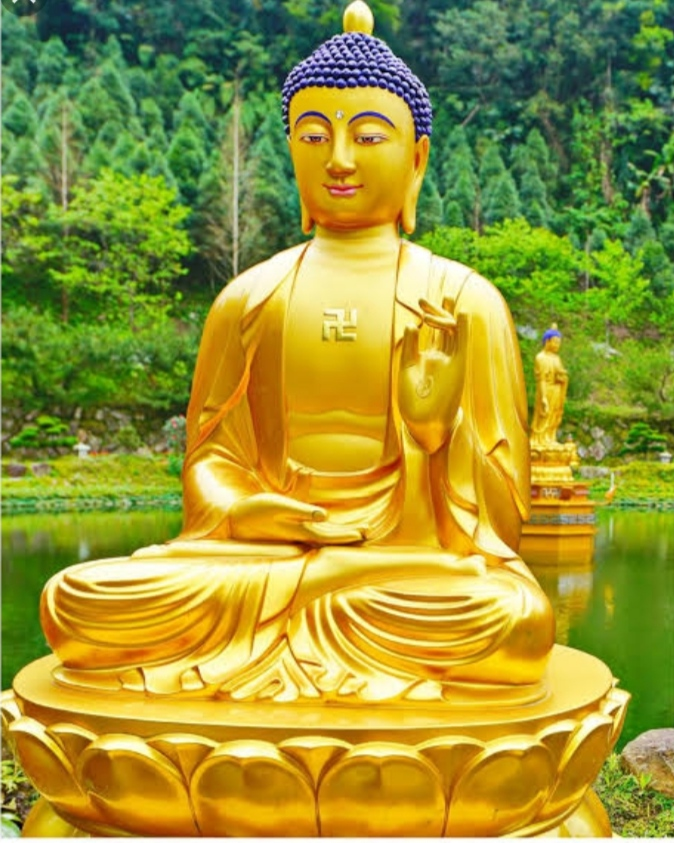
Gautam Buddha and Buddhism)
Mahatma Buddha, the originator of Buddhism, was a Kshatriya. He was born in Amar Kunj in Lumbini village near Kapilavastu in 563 BCE in the clan of Shakya. His father Shuddhodhan Kapilvastu was the head of Shakya Gana and mother Mahamaya was the daughter of the Kaushal dynasty. Due to the death of mother on the seventh day of her birth, she was raised by her aunt Prajapati Gautami. His childhood name was Siddharth. From the beginning, his focus was towards spirituality and often he was absorbed in contemplation. At the age of 16, he was married to Yashodhara (other names- Gopa, Bimba and Bhadra Kachna). From Yashodhara, Siddharth also gave birth to a son named Rahul, but Siddharth did not mind the worldly pleasures and fascination. They would be sad to see worldly sufferings and seek remedies for their relief. At the age of 29, Siddharth gave up his home. Which is called ‘Mahabhinishkramana’. While wandering for 7 years, he took initiation from Alar Kalam and Rudranak Ramputra but did not get enlightenment. He adopted harsh restraint and subjected his body to various tortures in order to gain enlightenment. He finally attained enlightenment under the Peepal tree at Uruvela (Bodh Gaya) at the age of 35 years. Since then he started being called Buddha. After attaining enlightenment, he went to Varanasi and gave his first sermon in Rishi Van (Sarnath). Which is called ‘Dharmachakrapravartan’. He undertook long journeys in propagating Buddhism at the age of 80 in 483 BCE in Kushinagar, capital of the Republic of Mall (Kasia in Kushinagar district of present-day eastern Uttar Pradesh), who is called Mahaparinirvan in Buddhist texts. • The symbols of Buddhism related to the life of Buddha- (birth- lotus and bull), (homicide-horse), (jnana-peepal, Bodhi tree), (nirvana-pada sign), (death-stupa).
Teachings of Buddhism – Mahatma Buddha said that the world is miserable. (Sarvam dukhan dukkham) and the cause of sorrow is trishna. Buddha stressed the principle of karma, he rejected the existence of the soul and strongly condemned the varna system. Buddha applied ‘Pratyatyasamutpad’ (meaning – all things in the world have arisen for some reason and thus they are dependent on it) to the whole world. He propounded the ‘Ashtangik Marg’ principle for attaining nirvana, which is as follows – (1) Samyak Darshan, (2) Samyak Sankalpa, (3) Samyak Speech / Reading, (4) Samyak Karma, (5) Samyak Jeevika, (6) Samyak Exercise / Effort, (7) Samyak Smriti, (8) Samyak Samadhi. He emphasized morality in contrast to the rituals and rituals of Vedic religion. He said that by adopting these eight routes, a person can attain nirvana without the help of a priest and editing a yajna. He strongly condemned animal sacrifice and told his followers the rules of conduct – (1) Do not covet foreign money. (2) Do not commit violence (3) Do not consume drugs (4) Do not speak untrue (5) Stay away from misconduct. Mahatma Buddha propounded the ‘Madhyam Marg’ i.e. neither too much rigid restraint nor too much luxury life. Their stated social rules of conduct have been stated by almost all religions. The people of lower castes were more in the religion of Buddhism because it has condemned the varna system. Jatireka manushayanam bhinnaste karmabhi: swakai:. Itetad Deshittam Buddhaairnrajatyakatvavibhi:. Nirjatirn bhidyete bhi bhidate. Akhandaika Nrijatirhi Vividhaharsevini. (Ashokabhyudayakavyam-Sutpitaka). The existence of God and soul was denied in Buddhism. The door of the Buddhist Sangha was open to all varnas, men and women, which led to the development of a sense of equality. Buddhism was more liberal than the Brahmin religion and its ideas of democracy were effective, that is why Buddhism became the most popular among the erudite religions of the time and its number of followers grew outside India also. Even today Buddhism is the main religion of many countries.
Important Facts – “Buddha Purnima” is an important festival of Buddhists which occurs on the full moon of Vaishakh. On this day, the birth of Buddha, the attainment of knowledge and the attainment of Mahaparinirvana. • Entry into the Sangh was called ‘Upasampada’. • The meeting of the Buddhist Sangha contained the text of the proposal which was called ‘Anusavan’. Buddhist monk Nagarjuna went to China in the first century AD and translated Buddhist works into Chinese. • With the rise of Buddhist, Jain and many religious sects in the sixth century BC, against the complexities of Brahminism, Bhagavat religion, Shaivism and Shakta religion also emerged which were the branch of Hinduism. • Four emotions – Sarvan momentary-ephemeral, Sarvan sorrow-sadness, Sarvan nirum-nirum, Sarvan svaalakhan-svaalakhan. • Four Arya Truths – (1) Grief, (2) Grief Samudaya, (3) Grief Deterrence, (4) Grief Deterrence Path. • Twelve volumes – Gyanendriyani Panchaiv, and Karmenndriyani. Mano Budhiriti Prokant, Dwadasayatanam Budhai:. • Pancha Skandha – sorrowing world: Skandha:, fifth Panch Prakritita:. Vigyan Vedana noun, sanskaro rupamev ch. • In Buddhism, there are two proofs and four departures – Pratyakshmanumanam, Pravidyattayam and. Chatushprasthanika Buddhada:, Khyata Vaibhashikadaya: • Four departures – Madhyamika, Yogachara, Sautrantika and Vaibhashika.
 असतो मा सद् गमय | तमसो मा ज्योतिर्गमय | मृत्योर्माऽमृतं गमय |